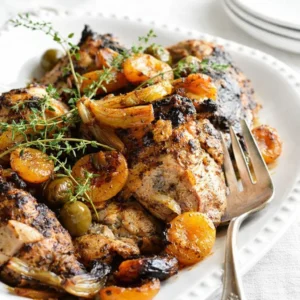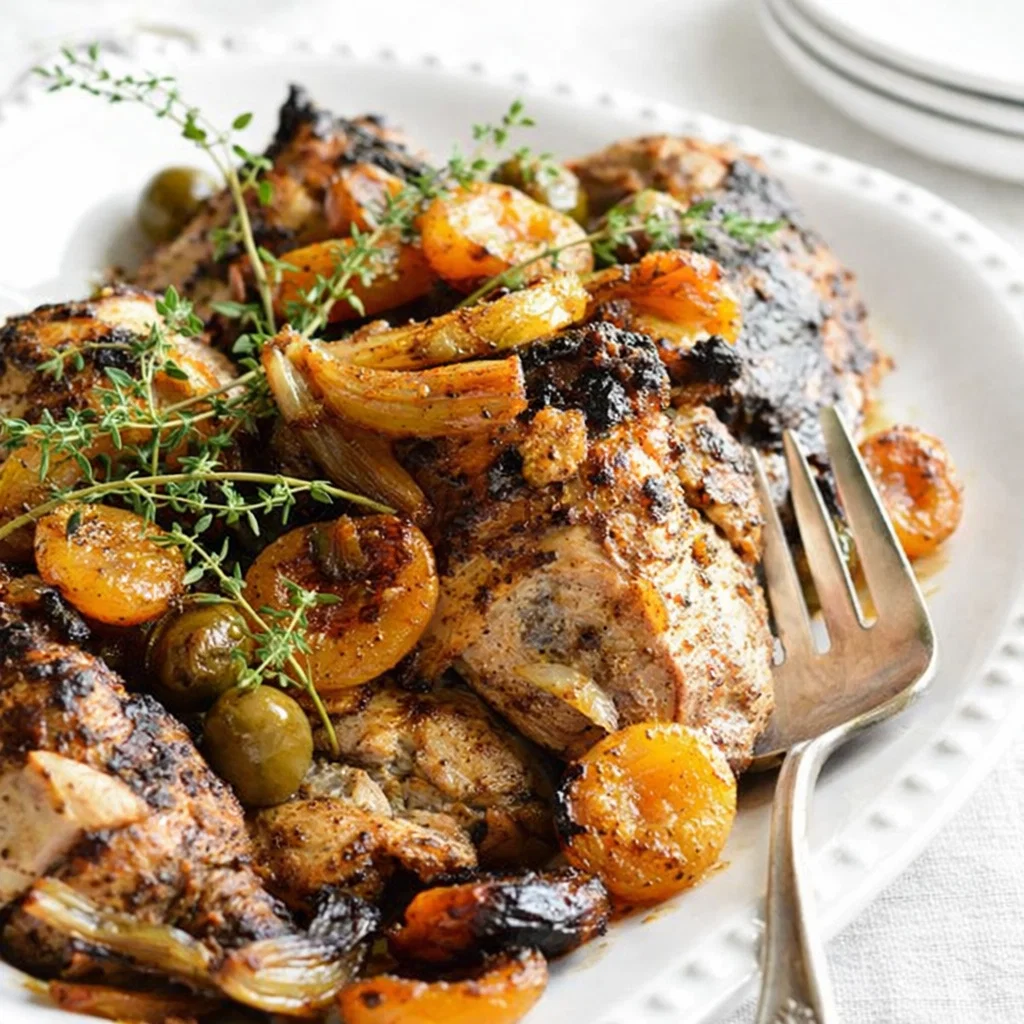
Apricot Chicken with Olives is the kind of dinner that makes you look like a culinary genius without actually requiring a degree from a fancy cooking school. If you have ever stared into your pantry at 5:00 PM feeling like a contestant on a cooking show where the secret ingredients are “exhaustion” and “hope,” then this Apricot Chicken with Olives recipe is your new best friend. It balances the sweetness of dried fruit with the salty punch of Mediterranean olives, creating a flavor profile that is sophisticated yet totally kid-friendly. Because let’s be honest, we all need a win that doesn’t involve a drive-thru or a bowl of cereal for the third night in a row. This dish brings a little sunshine to your table, whether it is a gloomy Tuesday or a fancy Sunday dinner with the in-laws. It is juicy, vibrant, and surprisingly simple to pull together, proving that you really can have a gourmet meal without spending your entire evening hovering over a hot stove.
What is Apricot Chicken with Olives?
When you think of Apricot Chicken with Olives, imagine a beautiful fusion of Mediterranean flair and cozy American comfort food. This dish relies on a base of succulent chicken pieces—think thighs and drumsticks for maximum juiciness—marinated in a bright, citrusy blend of orange and lemon juices. The “magic” comes from the sumac, a deep red spice that adds a lovely tang, and the honey which caramelizes into a sticky, golden glaze. The addition of meaty Castelvetrano olives and chewy dried apricots creates a sweet-and-savory contrast that is absolutely addictive. It is essentially a sheet-pan wonder that looks like it belongs in a glossy food magazine but tastes like home.
Reasons to Try Apricot Chicken with Olives
You should definitely give Apricot Chicken with Olives a shot because it is the ultimate “set it and forget it” meal that doesn’t sacrifice quality. First, the cleanup is a total breeze since most of the action happens on a single sheet pan, which means more time for a glass of wine and less time scrubbing dishes. Second, it is incredibly versatile; you can use a whole broken-down chicken or just stick to your favorite cuts like breasts or thighs. Third, the flavors are remarkably balanced—not too sweet, not too salty, but just right. It is also a fantastic way to introduce more “exotic” flavors like sumac to your family in a way that feels familiar and comforting. Plus, it leftovers beautifully, making your lunch the next day the envy of the entire office.
Ingredients Needed to Make Apricot Chicken with Olives
- 3.5 to 4 lb chicken (whole chicken cut into pieces works best)
- 1 tablespoon kosher salt
- 1 ½ teaspoons fresh ground black pepper
- ¼ cup fresh lemon juice
- 1 lemon, sliced and seeded
- ¼ cup fresh orange juice
- ¼ cup honey
- 4 to 6 garlic cloves, thinly sliced
- ¾ teaspoon dried thyme
- 3 tablespoons ground sumac
- 1 cup dried apricots
- 1 cup pitted Castelvetrano olives
- 2 tablespoons olive brine
- 4 large or 8 small shallots, peeled and cut lengthwise
- ¼ cup dry white wine
- 4 tablespoons olive oil (divided)
Instructions to Make Apricot Chicken with Olives – Step by Step
Step 1: To begin your journey toward a delicious dinner, start by seasoning every single piece of your chicken. You want to be generous here. Use your kosher salt and fresh ground black pepper to coat the skin, but here is a pro tip: lift up that skin and get the seasoning directly onto the meat as well. This ensures every bite is seasoned from the inside out. Once the chicken is prepped, set it aside for a moment while you build your flavor base.
Step 2: Grab a large bowl or a sturdy resealable gallon-sized bag to mix your marinade. Whisk together the fresh lemon juice, orange juice, honey, sliced garlic, dried thyme, sumac, and 3 tablespoons of the olive oil. This mixture is the soul of our Step by Step process, and the sumac will give it a gorgeous ruby hue. Once combined, toss in your lemon slices, dried apricots, pitted olives, and that salty olive brine.
Step 3: Now, place the chicken into the marinade. If you are using a bag, squeeze out the excess air and seal it tight. If using a bowl, cover it with plastic wrap. You really want to let these flavors mingle, so refrigerate the chicken for at least a few hours, though 24 hours is the sweet spot. Make sure to flip the bag or toss the chicken a few times so every nook and cranny gets bathed in that citrusy goodness.
Step 4: When you are ready to get cooking, set your oven racks. You want one about 8 inches from the broiler and another in the lower third of the oven. Preheat your oven to a hot 450 degrees. While that’s heating up, take your quartered shallots and toss them with the remaining tablespoon of olive oil on a large sheet pan. Spread them out with the cut sides down and slide them into the oven for about 5 to 10 minutes. This Step by Step move allows the shallots to soften and turn golden before the chicken joins the party.
Step 5: Pull the pan out and use a slotted spoon to transfer the chicken, apricots, olives, and lemons from the marinade onto the sheet pan. Arrange the chicken skin-side up so it can get nice and crispy. Whatever you do, do not throw away the leftover liquid in the bag! Save that reserved marinade for later. Roast the chicken for about 15 minutes, basting it occasionally with the pan drippings until the juices run clear, which usually takes another 10 minutes or so.
Step 6: For the grand finale of our Step by Step guide, remove the pan from the oven and crank your broiler up to high. Pour that reserved marinade and the dry white wine over the chicken pieces. Slide the pan back under the broiler for 3 to 5 minutes. Keep a close eye on it! You want the skin to turn a deep, dark brown and the liquid to bubble into a thick, syrupy sauce. If those apricots look like they are getting a bit too charred, just tuck them under a piece of chicken or flip them over in the sauce. Transfer everything to a large platter, pour that liquid gold sauce over the top, and get ready for the applause.
What to Serve with Apricot Chicken with Olives
The beauty of Apricot Chicken with Olives is that the sauce is so good, you will want something to soak it all up. A bed of fluffy white rice or buttery couscous is a classic choice that never fails. If you are feeling a bit more adventurous, creamy polenta or even garlic mashed potatoes provide a rich base that complements the tanginess of the sumac. For a lighter side, a simple arugula salad with a quick lemon vinaigrette cuts through the sweetness of the apricots beautifully. Or, if you are a fan of traditions, some crusty sourdough bread is essential for mopping up every last drop of that sauce from your plate.
Key Tips for Making Apricot Chicken with Olives
To get the best results with your Apricot Chicken with Olives, try to use Castelvetrano olives if you can find them. They are buttery, mild, and lack that harsh vinegary bite that some other olives have, which makes them perfect for roasting. Also, don’t be afraid of the sumac; it is a game-changer that adds a unique “zing” without the moisture of extra citrus. If you find your honey is too thick to whisk, pop it in the microwave for ten seconds to make it pourable. Lastly, always use fresh citrus juice rather than the bottled stuff—your taste buds will thank you for the bright, clean flavor.
Storage and Reheating Tips Apricot Chicken with Olives
If you happen to have leftovers, which is a big “if” because this stuff disappears fast, store your Apricot Chicken with Olives in an airtight container in the fridge for up to three or four days. When you are ready for round two, the best way to reheat it is in the oven at 350 degrees. This helps the skin stay somewhat firm and keeps the chicken from getting that weird rubbery texture that microwaves sometimes cause. Add a splash of water or chicken broth to the pan if the sauce has thickened too much. It actually tastes even better the next day as the flavors have had more time to get to know each other.
FAQs
Can I use chicken breasts instead of whole chicken? Yes, you definitely can, but keep in mind that breasts cook faster than thighs. Adjust your roasting time to ensure they don’t dry out. Skin-on, bone-in breasts will give you the most flavor.
What if I can’t find sumac? While sumac has a specific flavor, you can swap it with a bit of extra lemon zest and a pinch of paprika in a pinch. It won’t be exactly the same, but it will still be delicious.
Is this recipe gluten-free? Naturally, yes! Just double-check your white wine and olives to ensure no hidden additives, but the core ingredients are all gluten-free.
Can I make this in a slow cooker? You can, but you will miss out on that crispy skin and the caramelized shallots. If you go the slow cooker route, maybe pop the chicken under the broiler for a few minutes at the end to get some color.
Final Thoughts
At the end of the day, Apricot Chicken with Olives is more than just a meal; it is a stress-free way to bring a little gourmet flair into your busy life. Whether you are cooking for a crowd or just trying to survive a weekday, this recipe offers a perfect balance of ease and elegance. It is forgiving, flavorful, and filled with ingredients that make you feel good about what you are putting on the table. So, grab those apricots and give this Mediterranean-inspired dish a try. You might just find it becomes a permanent resident in your weekly dinner rotation.
Print
- Prep Time: 20 minutes
- Cook Time: 40 minutes
- Total Time: 60 minutes
- Yield: 4 servings 1x
- Category: Main Course
- Method: Oven
- Cuisine: American/Mediterranean
- Diet: Gluten Free
Description
This Mediterranean chicken with apricots, olives, and sumac is full of bright, savory-sweet flavor and is simple to prepare.
Ingredients
- 3.5 to 4 lb chicken
- 1 tbsp kosher salt
- 1 1/2 tsp fresh ground black pepper
- 1/4 cup fresh lemon juice
- 1 lemon, sliced and seeded
- 1/4 cup fresh orange juice
- 1/4 cup honey
- 4 to 6 garlic cloves, thinly sliced
- 3/4 tsp dried thyme
- 3 tbsp ground sumac
- 1 cup dried apricots
- 1 cup pitted Castelvetrano olives
- 2 tbsp olive brine
- 4 large or 8 small shallots, peeled and cut lengthwise
- 1/4 cup dry white wine
- 4 tbsp olive oil, divided
Instructions
1. Season each piece of chicken inside and out, including under the skin, with salt and pepper.
2. In a large bowl or resealable bag, combine lemon juice, orange juice, honey, garlic, thyme, sumac, and 3 tablespoons olive oil.
3. Add lemon slices, apricots, olives, and olive brine to the marinade.
4. Add chicken, cover tightly, and refrigerate up to 24 hours, turning occasionally.
5. Preheat oven to 450°F. Position one rack in the lower third and another about 8 inches from the broiler.
6. Toss shallots with remaining olive oil and spread on a sheet pan, cut side down. Roast on lower rack for 5–10 minutes until lightly golden.
7. Remove pan and add marinated chicken and solids using a slotted spoon, reserving marinade. Arrange chicken skin-side up.
8. Roast for 15 minutes, baste, then continue cooking about 10 minutes more until juices run clear.
9. Remove from oven and set broiler to high. Pour reserved marinade and wine over chicken.
10. Broil 3–5 minutes until browned and sauce thickens, turning apricots if needed to prevent burning.
11. Transfer chicken to a platter and spoon sauce over the top before serving.
Notes
Serve with rice, noodles, mashed potatoes, or polenta.
For deeper flavor, marinate overnight.
Castelvetrano olives add a mild buttery flavor, but other green olives can be substituted.
Nutrition
- Serving Size: 1 portion
- Calories: 520
- Sugar: 18g
- Sodium: 780mg
- Fat: 24g
- Saturated Fat: 5g
- Unsaturated Fat: 17g
- Trans Fat: 0g
- Carbohydrates: 28g
- Fiber: 3g
- Protein: 42g
- Cholesterol: 145mg